
Product · Target Audience
Know exactly who you're built for
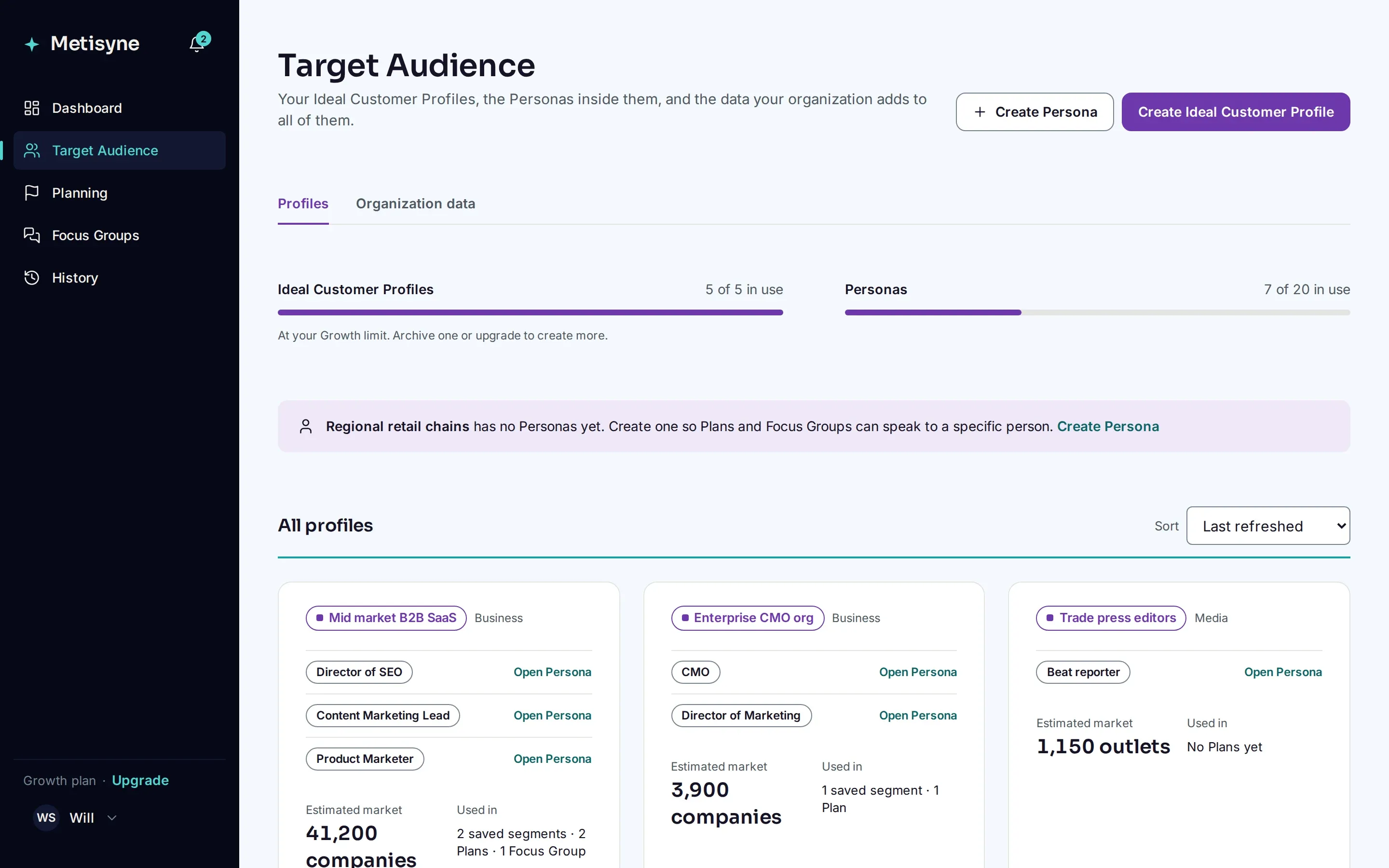
Target Audience is where your Ideal Customer Profiles and Personas live. You describe the customer in your own words, and Metisyne enriches it with current behavioral and market data, so every decision is made with someone real in mind.
Start in your own words
Do we need a spreadsheet to begin?
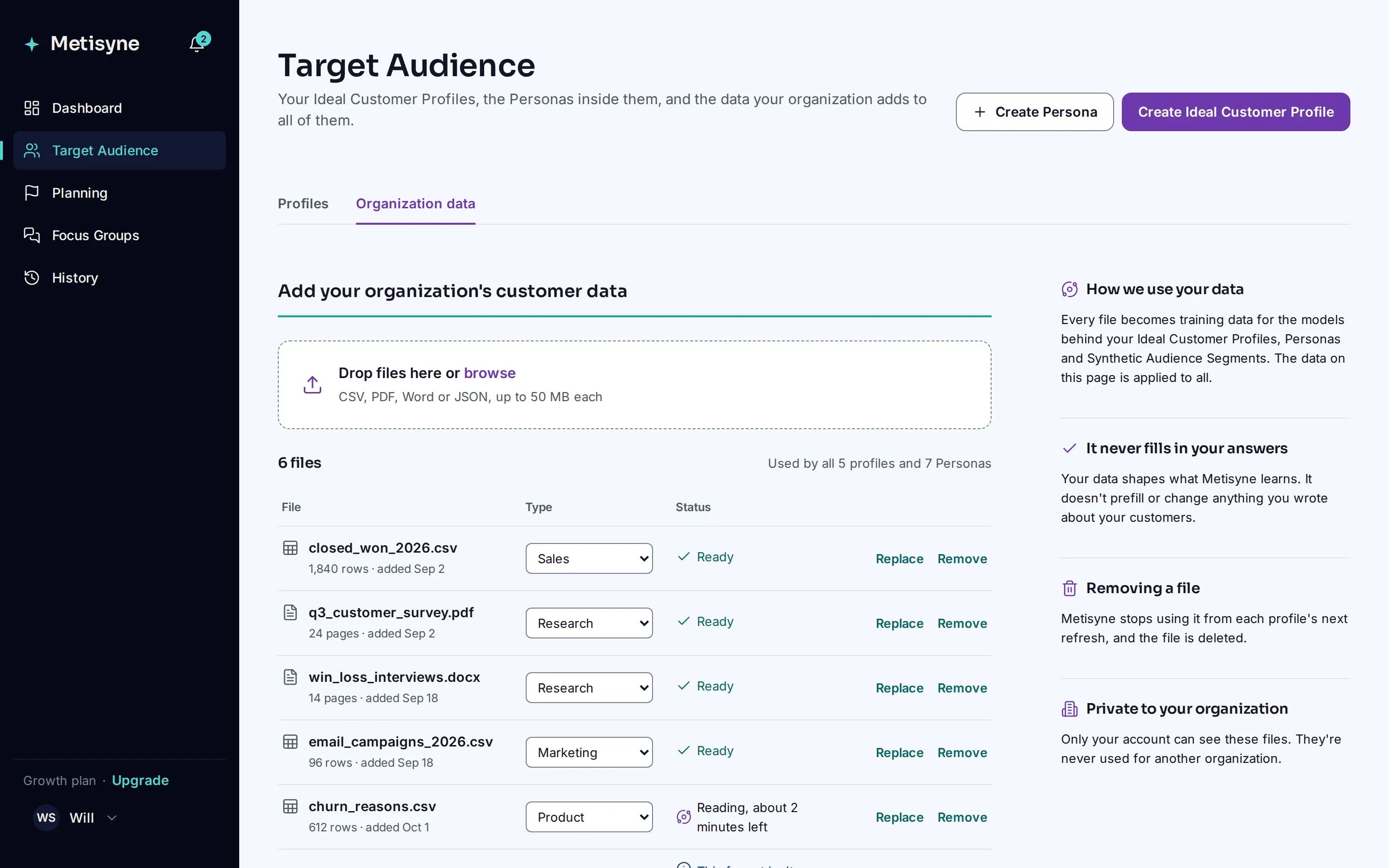
No. Answer a few questions about your customer in plain language. If you have sales, marketing, research or product data, add it and it becomes training data for every profile, without changing a word you wrote.
Your words
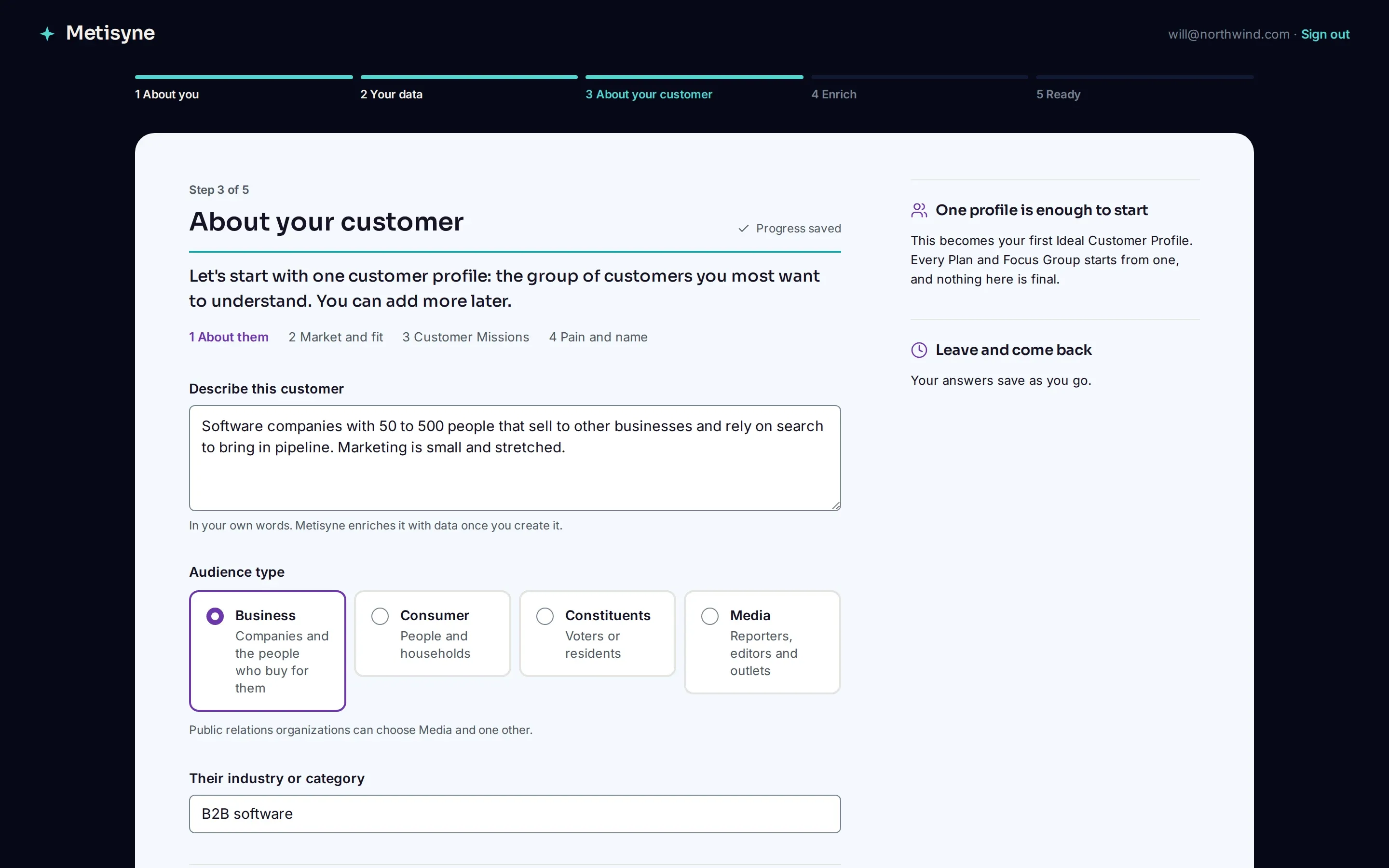
Mid market B2B SaaS
Software companies with 50 to 500 people that sell to other businesses. Marketing is small and stretched, and the CMO answers to a board that wants proof.
Your description, as written
Enriched
Customer Missions
What is this customer actually trying to get done?
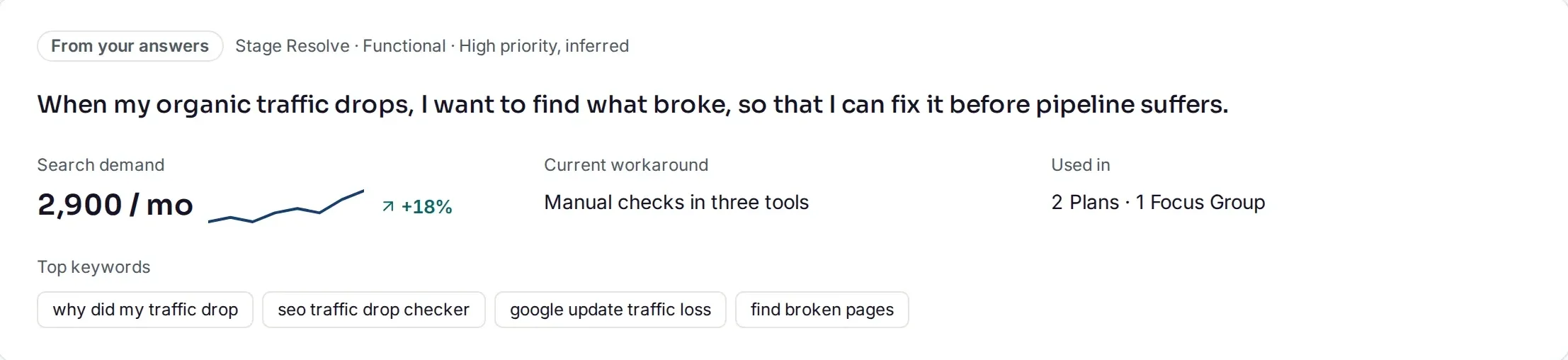
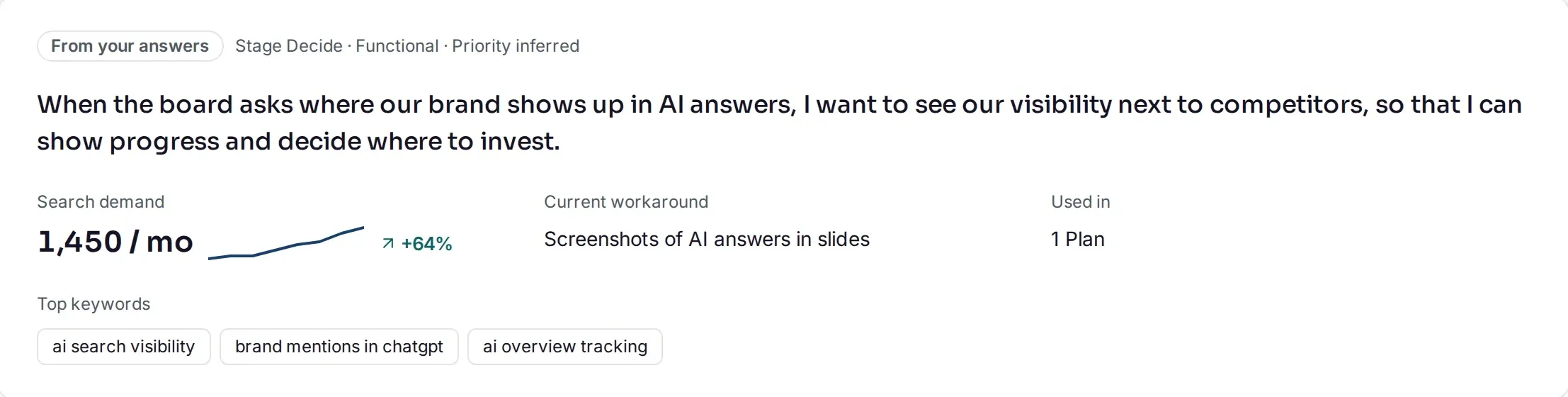
Customer Missions describe what your customer is trying to accomplish that you can help with, in "When I..., I want to..., so that I can..." form. Each one shows how many people search for it and how they handle it today.
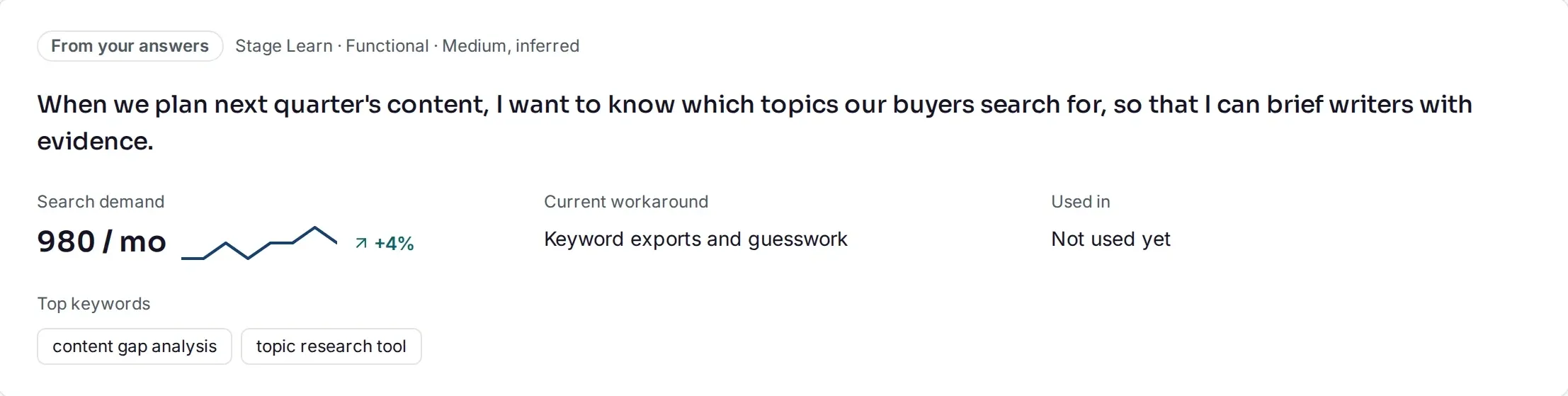
Behavior
How do they search and where are they in the journey?
Behavioral keywords show the searches your audience actually makes. Each one is placed in their journey, from learning to deciding to fixing what broke, so you know what they need from you right now.
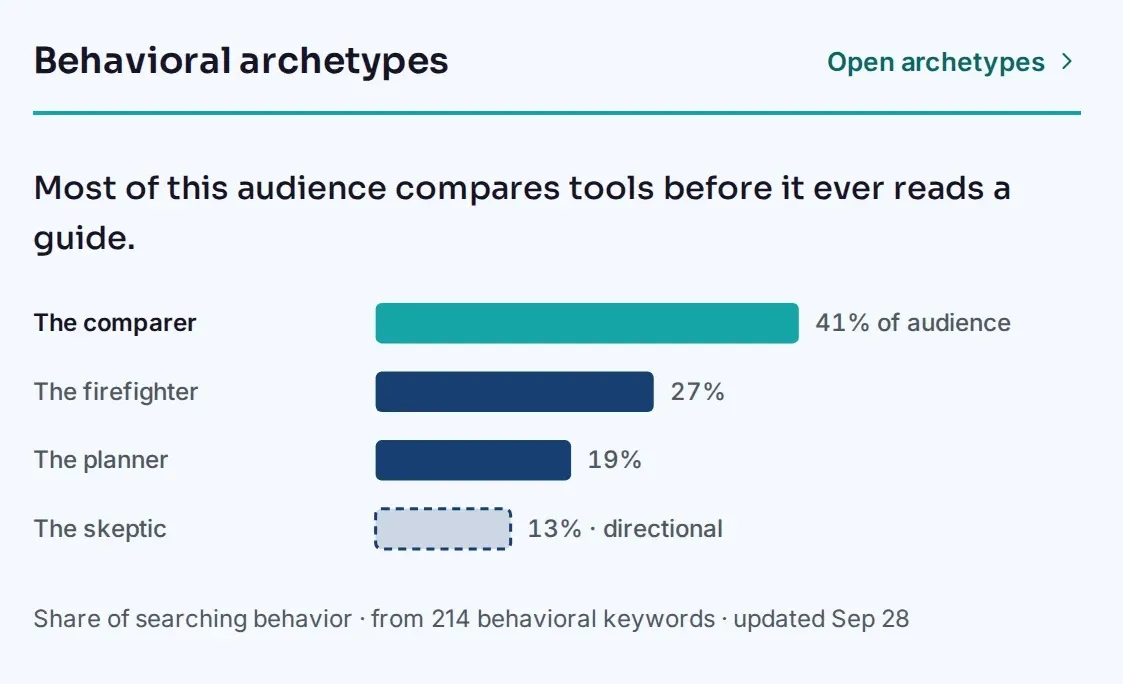
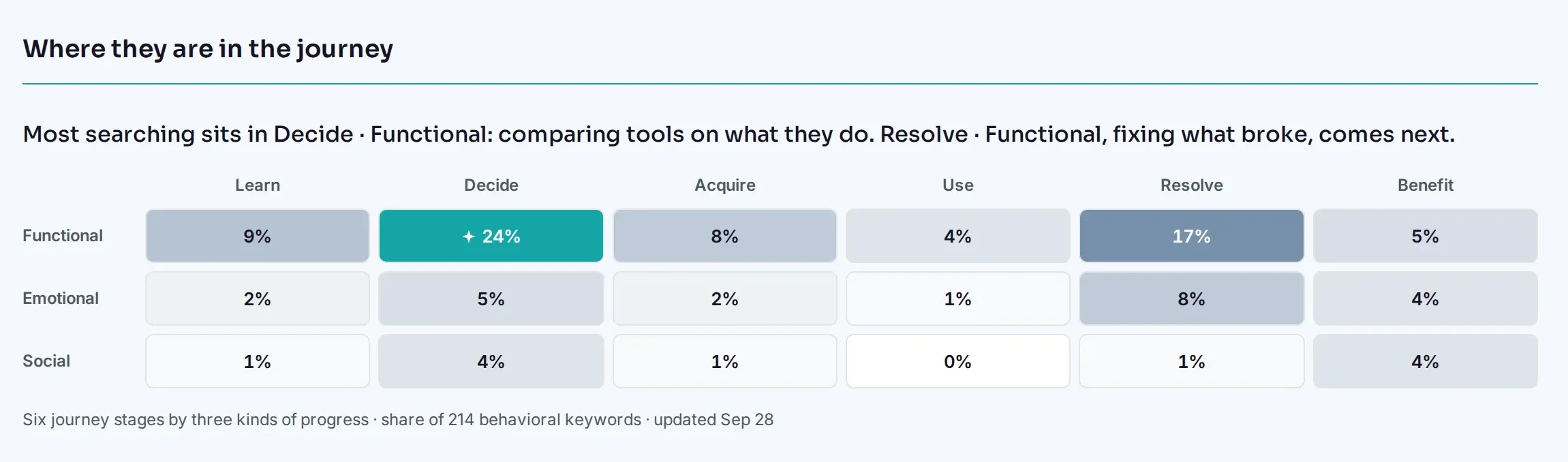
Perception
How do they see us compared with our competitors?
Perception shows how your audience feels about you, how they see each competitor, what they say in reviews and how often you appear in AI answers on their topics.
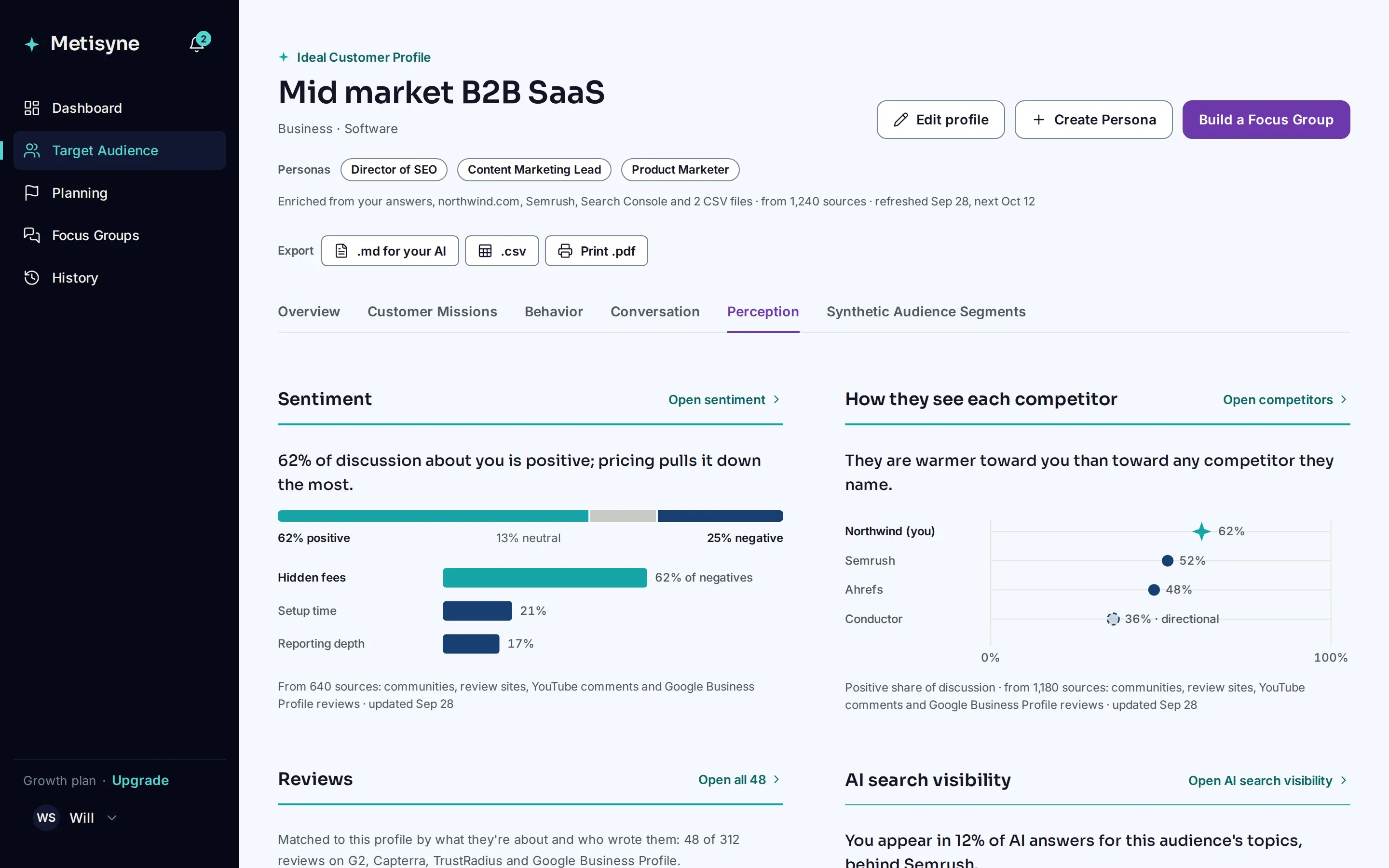
Personas and your own data
Can it use what we already know?
Yes. Add keywords you already know, and Metisyne checks each one against how this audience really searches, with the reason. Add your own customer data, and it strengthens every profile and Persona.
What your profiles give you
Ideal Customer Profiles and Personas that mature as the data does, shared by leadership and every team.
- Ideal Customer Profiles in your own words, enriched with five kinds of data
- Personas inside each profile, with where each one differs
- Customer Missions with search demand, workarounds and keywords
- Behavior, conversation and perception, each with its answer first
- Kept current, with what changed since the last refresh
- Exports as .md for your AI, .csv and PDF
Common questions about Target Audience
Straight answers about where the data comes from, how profiles stay current and what you need to get started.
What do I need to get started?
A description of one customer in your own words. Choose whether they're a business, a consumer, constituents or media, and Metisyne builds your first Ideal Customer Profile from there. One profile is enough to start.
Where does the data come from?
Five kinds of sources: search and keyword data, online communities and reviews, third party market data, third party industry data, and other data sources, ethically sourced. You can add your own customer files too. Every observation shows where it came from and how sure Metisyne is.
How current is a profile?
Profiles refresh on your plan's schedule, and the Overview tab shows what changed since the last refresh, so you never have to reread the whole profile.
What's the difference between an Ideal Customer Profile and a Persona?
An Ideal Customer Profile is the kind of company, household, constituency or media you serve. A Persona is a specific person inside it, like a Director of SEO at a mid market software company. Each Persona shows where it differs from its profile.
How do I get a profile to the rest of my team?
Each account has one user today, so profiles travel as exports: .md for your team's AI tools, .csv, or a printed PDF. Everyone works from the same customer, word for word.
Create your first Ideal Customer Profile
Describe the customer you fit best and see it enriched with current data, or try the free builder first.
The rest of Metisyne
Size an idea against your audience and find what to lead with before you spend.
See PlanningAsk your audience before you build, say or spend, and get the answer with its why.
See Focus GroupsYour footprint with each audience over time, and what moved it.
See Horizon