Better decisions for every team that reaches your customers
Organic, paid media, public relations and leadership each make different decisions. Metisyne gives each one the context about your customer that its decisions need, backed by current market data.
How four teams answer their questions from one customer profile
Each team brings its own question. The answer comes from the same Ideal Customer Profile, so the work stays connected from the boardroom to the page, the ad and the pitch.
Target Audience
- Director of SEO
- Content Marketing Lead
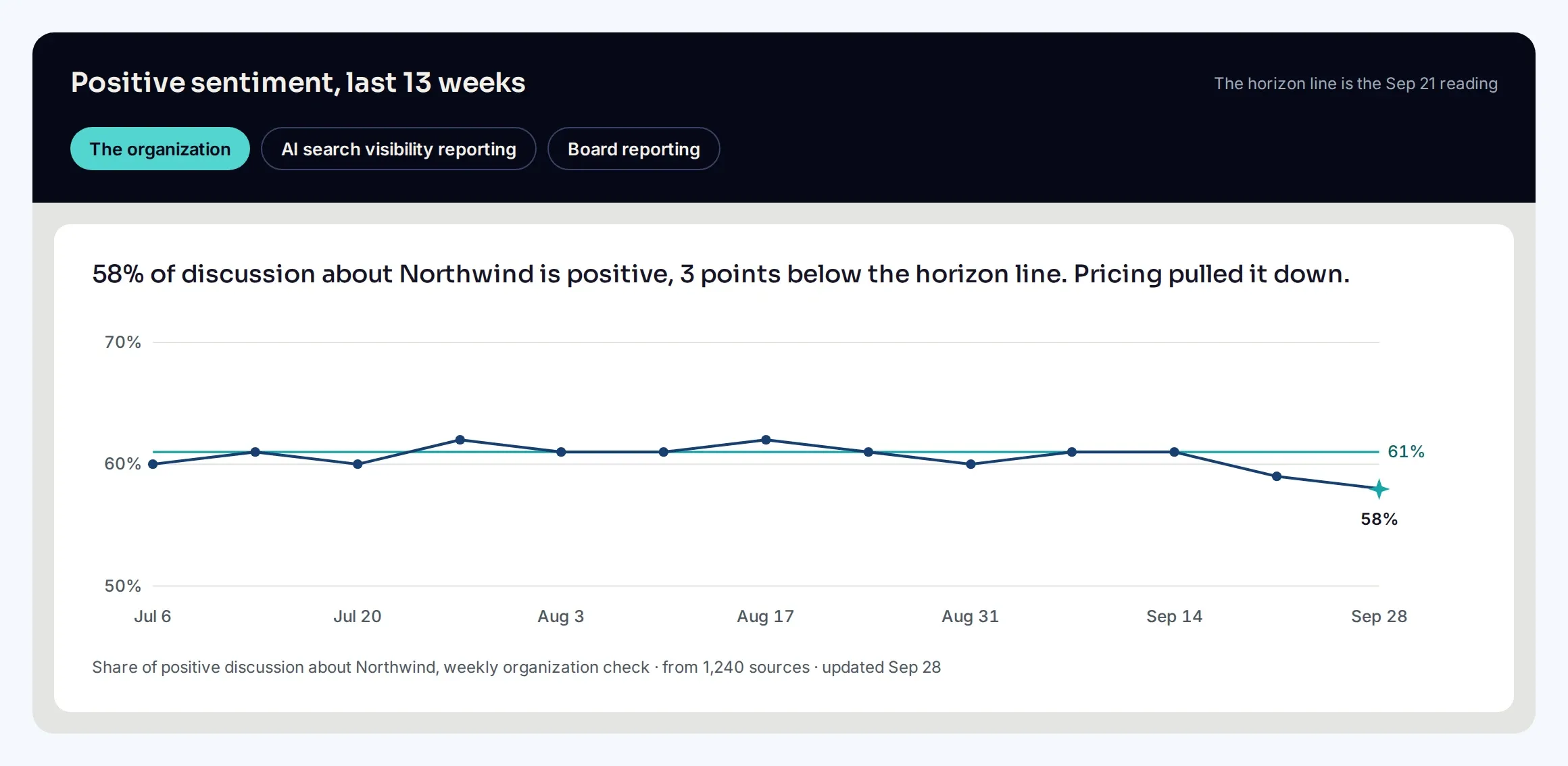
62% positive
Customer Missions, behavior, conversation and perception
Enriched from five kinds of data: search and keyword data, online communities and reviews, third party market data, third party industry data, and other data sources, ethically sourced.
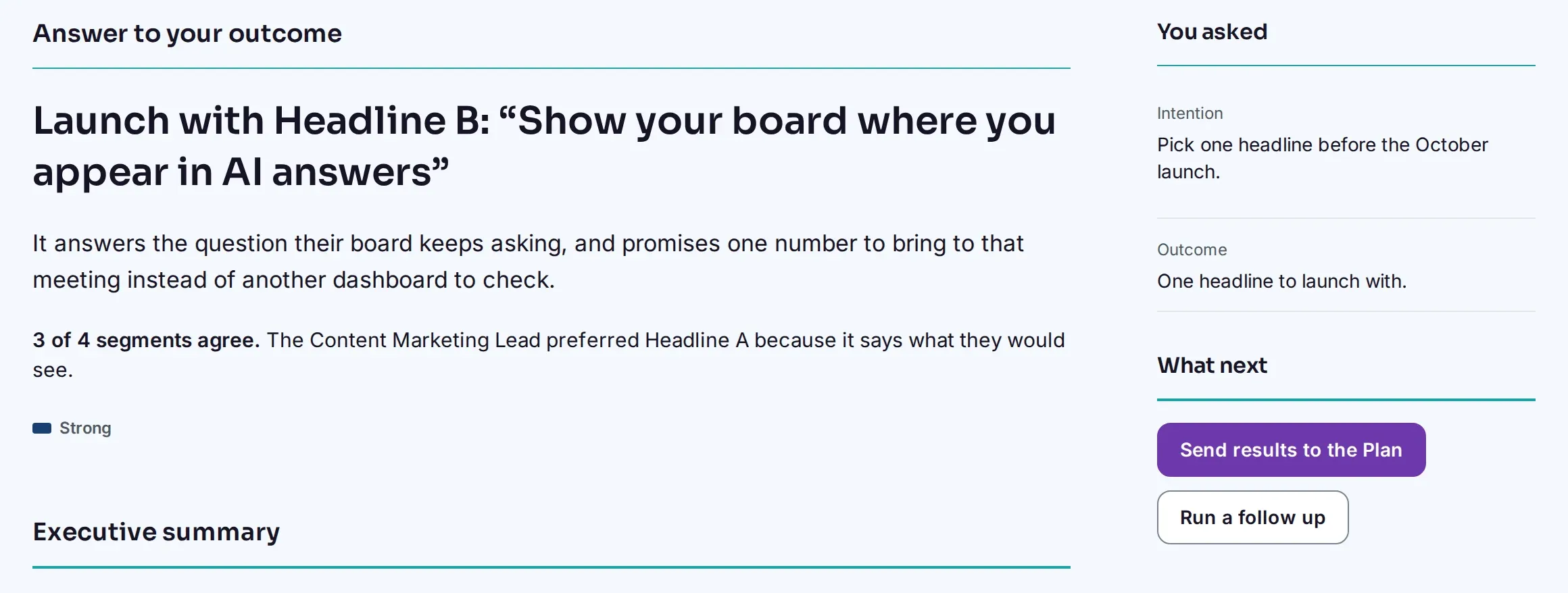
Focus Groups
Ask this audience which message they'd choose, and get every answer with its reason.
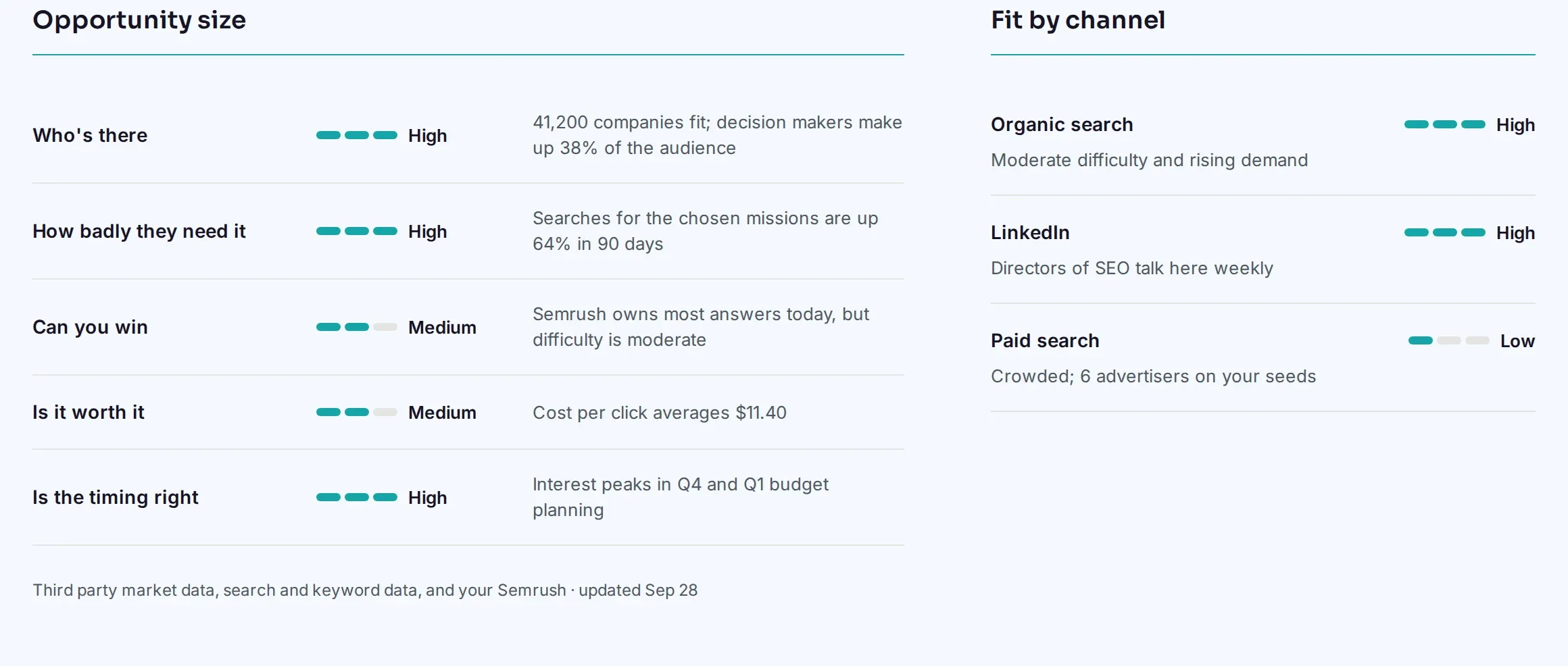
Planning
Size an idea against this audience: how big it is, which channels fit and the angle nobody is using.
We wrote for keywords, now we write for people.
Before
We know our topics and we know our craft. But we planned from a keyword export, so every page was written for a search term, not a person. Our content read like everyone else's, and it reached plenty of people who were never going to buy.
The turn
So we started from the customer we want: what they're trying to get done, the questions they ask and the words they use. The keyword list became one view of our audience instead of the only one.
Now
We choose topics by how well they match the audience we want, brief writers with the questions people really ask, and show leadership which audiences our content reached.
We stopped paying to find out
Before
Every click costs more each quarter, and every test is real money. Our audience came from whichever tool was nearest, our keywords from the same places as every competitor's, and our headlines from us. We learned what worked a month of spend later.
The turn
So we started from the customer leadership described, ranked our keywords by how well they match that audience, and looked at what similar campaigns lead with until we found the angle nobody was using.
Now
We test the ad with Synthetic Audience Segments before we bid. When the CMO asks why paid went the way it did, we answer with the reason, not just the result.
We stopped picking the angle on a gut feeling
Before
Every announcement needed an angle, and we chose the one that felt right. Too many pitches went to reporters who didn't cover the beat, and the quarterly report listed placements while leadership asked what had changed.
The turn
So we started from how each audience sees us, including the press, and tested the angle with them before the pitch went out.
Now
Our pitches land with the people who cover the story, and we report how our footprint moved with each audience, and why.
Our customer used to get lost on the way down
Before
We know who we're built for. We did the work on the Ideal Customer Profile and the Personas. But by the time that customer reached the ad, the page or the pitch, it had passed through a deck, a brief and a few handoffs, and the reports that came back told us what the teams did, not how our customers see us.
The turn
So we described the customer once, in our own words, and every team now plans and tests from that same profile, enriched with real behavioral data and kept current.
Now
The executive summary tells us how each audience sees us, what changed and why. We decide from that, and budget follows product-market fit instead of the loudest channel.
See it with your own customer
Get in touch, and we'll show you Metisyne through a customer your team serves.